1 Kings 22
The last sermon in a series, “The Troubler of Israel,” preached at St Margaret’s Nedlands 20th July 2025.
A video of this sermon can be found on the St Margaret’s website: www.nedlands.anglican.perth.org
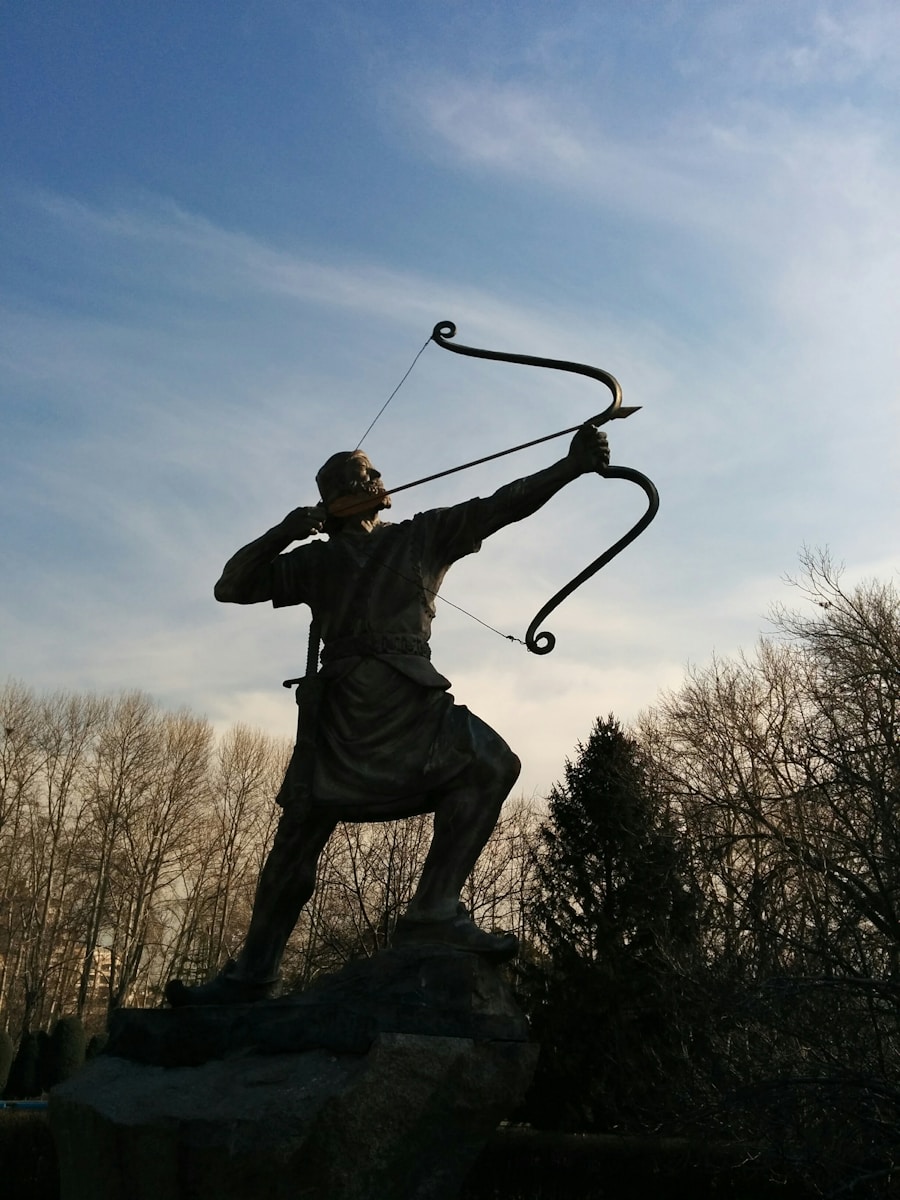
What a strange story we have before us this morning! God has decided Ahab’s end has come. How will it happen? First is God’s decision that he will die in battle with the army of Syria. Then he speaks before the armies of heaven about how it is to be achieved. A spirit suggests getting the prophets to lure Ahab to battle at Ramoth-Gilead. God agrees, and gives him leave to do it. This is the heaven-story. Down on earth the king meets with his advisors. He desires to retake some lost territory, but wants reassurance from the prophets. The prophets are all in his pocket, so they encourage him on. The king of Judah, who has come on a visit, is uneasy. Isn’t there a prophet of Yahweh we can consult? Micaiah is summoned and warned not to make trouble. At first, he goes along with the pack, but Ahab adjures him to be truthful. He predicts disaster. Ahab remains set on his original plan—he has forty prophets on his side—but is apprehensive. He goes into battle disguised as a common soldier. An archer draws his bow and fires at no one in particular. His arrow hits Ahab at a gap in his armour. He dies in the evening and his army dissolves.
So the king died, and was brought to Samaria. And they buried the king in Samaria. And they washed the chariot by the pool of Samaria, and the dogs licked up his blood, and the prostitutes washed themselves in it, according to the word of the LORD that he had spoken. Now the rest of the acts of Ahab and all that he did, and the ivory house that he built and all the cities that he built, are they not written in the Book of the Chronicles of the Kings of Israel? So Ahab slept with his fathers, and Ahaziah his son reigned in his place.
(There was none who sold himself to do what was evil in the sight of the LORD like Ahab, whom Jezebel his wife incited. He acted very abominably in going after idols, as the Amorites [Canaanites] had done, whom the LORD cast out before the people of Israel.)[1]
A bad end for a bad king! And so ends the First Book of Kings
Set yourself against God, and you will cop it in the end. One way or another you will go down. It should be obvious: you can’t fight God and think you will win. “Not a sparrow falls to the ground without your Father,” is how Jesus put it. The smallest creatures are under his control; how much more his human creatures. This is a great comfort to those who know God loves them, but for those who don’t, it is a terror. The flight of an arrow, an out of control car, a switch in the wrong position, the slip of a scalpel, a flooded river: all are in God’s hands.
We call it “providence.” God not only created everything, he keeps it existing; he superintends his creation, protecting, providing, controlling. This is “theism.” Most people think, if God made the universe, he made it to operate automatically. He wound it up like a clock—gave it an initial push—and doesn’t need to do anything more; its laws will carry it on until it runs down and dies. That is called “deism.” It is not what Jesus taught. “You fool,” God says to the rich farmer who stored up his harvest without a thought towards the God who gave it. “Tonight they are foreclosing on your life.”[2] Ominous words! God’s providence is about to catch up with him. For good or ill, none of us can escape it. The days of our lives are numbered.[3]
But a certain man drew his bow at random and struck the king of Israel between the scale armour and the breastplate.
We can learn lessons from these stories, but the author of the Book of Kings didn’t record this story to teach us about providence. It is an example of providence at work, but the reason for the story is different.
I changed the subject of today’s sermon. I had meant to have a series of four sermons on Elijah. There are several other Elijah incidents we could look at. But why mix them up with the story of an unnamed prophet, and the story of Micaiah we have just read? I realized Elijah was not the main subject. 1 Kings is telling the story of the kings from the time of Solomon until the exile to Babylon, and this part is about Ahab at a turning point in Israel’s history. If it were a made-up story, the prophet who predicted Ahab’s death would be Elijah, but no, it is this otherwise unknown prophet Micaiah. So, it is better we finish the series with Ahab’s end. Why does Kings record it then?
It’s not like someone decided to write a history of Israel’s kings because that would be an interesting thing to do; there is more to it than this. God promised Abraham to give his descendants the land of Palestine, bless them, and make them his special people. From about one thousand BC—Saul and then David—it becomes a story of kings–governments, if you like. If you read the beginning of 1 Kings you will see that by the time of Solomon God has fulfilled pretty well all his promises to Abraham— but by the end of his reign the cracks are beginning to appear. By the end of 2 Kings Judah is no more. The two books of Kings tell the story of how Israel gradually disintegrated until by the end of 2 Kings first Israel, then Judah have lost the land God promised them, Jerusalem and its temple have been destroyed, and the survivors marched into slavery in Babylon—slavery in Egypt was where they began. It is a tragic tale. How is it that this people who have been promised so much are now strangers in a foreign land? 1 and 2 Kings give the answer.
You may have heard it said that the Old Testament is all about Jesus, and you will hear some pretty wacky sermons trying to squeeze him in somehow. But it’s true; Israel’s Scriptures areabout Jesus, at least that’s what Jesus said to the travellers on the road to Emmaus,[4] and its why they are still part of our church lectionaries.
1 and 2 Kings, as I said, are a tragedy, but not quite. When the author wrote,[5] the survivors of the holocaust were state slaves in Babylon and the land of Israel was in ruins. The last king and his sons were brought before the king of Babylon, the sons killed, and the king’s eyes blinded so that would be the last thing he would ever see. It was the end of a nation, the end of a dream that there would one day be a kingdom where the king would rule righteously and the people live in freedom and prosperity and the knowledge of God. I said the books of Kings are a tragedy, but they have a strange ending:
And in the thirty-seventh year of the exile of Jehoiachin king of Judah, in the twelfth month, on the twenty-seventh day of the month, Evil-merodach king of Babylon, in the year that he began to reign, graciously freed Jehoiachin king of Judah from prison. And he spoke kindly to him and gave him a seat above the seats of the kings who were with him in Babylon. So Jehoiachin put off his prison garments. And every day of his life he dined regularly at the king’s table, and for his allowance, a regular allowance was given him by the king, according to his daily needs, as long as he lived.
Sounds like an uninteresting detail, but the author is telling us the story is not yet over. God has made promises and those promises will be fulfilled. He has promised that one of David’s son’s will establish an eternal kingdom and rule the world forever. That promise was alive in Israel and Judah from the time of David—1000 BC. Each new king brought renewed hope, but hopes always came to nothing. So it may not be Jehoiachin, but there are still descendants in David’s kingly line, and the promise waits its fulfilment. This is how the books of Kings are about Jesus; they look forward to a future, yet to come. The faithful in Israel went on believing, and five hundred years later an angel spoke to a girl called Mary and told her she would bear a child:
He will be great and will be called the Son of the Most High. And the Lord God will give to him the throne of his father David, and he will reign over the house of Jacob forever, and of his kingdom there will be no end.”[6]
Come back to Micaiah and Ahab. It is hard to know what to make of Micaiah’s vision. I would not want to be dogmatic about how things work in heaven. What we can say is that there is a power beyond the power politics of nations.
I saw all Israel scattered like sheep upon the hills, like sheep without a shepherd.
This is to be Israel’s lot until the time appointed by God. People without a king are like sheep without a shepherd. God’s plan was to bring his people together and make them one. It should be the king’s task to do that, but so many did the opposite. Most new reigns began—most new governments begin—with a vision for a better world. Ahab and Jezebel wanted progress, they wanted the “kingdom of God,” if you like. Most new regimes do. Whether it be an Islamic revolution, or a Marxist workers’ paradise, or the dream of a new age of democratic secularism, the prospect of an ideal society draws people on. But the hope is always dashed, dashed in part by the twistedness of human nature.
But God has promised it will happen, not as we saw last week by smashing rocks, and great upheavals, and firestorms, but by “the voice of a thin whisper.”
When Jesus stepped out of the boat that had just brought him across the Sea of Galilee, Mark tells us he looked at the crowds who were clamouring to get close to him, and had compassion on them, “because they were like sheep without a shepherd.”[7] Jesus saw himself as the good shepherd, one who would gather his people together by leading them to God, and then to the peace and prosperity all people desire.[8] But listen to his words towards the end of his ministry.
O Jerusalem, Jerusalem, the city that kills the prophets and stones those who are sent to it! How often would I have gathered your children together as a hen gathers her brood under her wings, and you were not willing! Behold, your house is forsaken. And I tell you, you will not see me until you say, ‘Blessed is he who comes in the name of the Lord!’”[9]
Israel would not have this king, though he hints that it will not always be so. As he climbed out of the boat that day and saw the people, he had compassion on them because they were like sheep without a shepherd, and of course, this is how he sees us—but what did he do? “He taught them many things!”[10]—and of course he fed them. The kingdom of God would come, he said, not in a rush, but stone by stone, a man here, a woman there, a child—he would build his kingdom one person at a time. At the beeginning his kingdom would be like a mustard seed, but at the end it would have grown into a mighty tree in which the birds of heaven—the nations of the world—would come to nest. How? By teaching and by compassionate service, and by suffering.
One of the things he taught was that disciples should pay attention to the words of the ancient prophets; God has spoken, and what he has said he says—for all time. Of course, we need to understand what was happening then and what is different in our own time; and apply the word then to the situation now. And the biggest difference is that the king has come. When we looked at Elijah at Mt Carmel, I skipped over Elijah’s instruction to kill the prophets of Baal. Why don’t Christians kill their enemies? The Ayatollah Khomeini said Jesus one mistake was to reject the use of the sword. I had a student who believed it should be a capital crime to build a place of worship other than Christian. But instinctively we know this is wrong. But why, if the Old Testament is the word of God? The answer is Jesus. This is where Islam gets it wrong; they are back in the Old Testament, and have not caught up with the gospel of salvation. Jesus is not only what the Old Testament is about, he is the meaning of history. All of us decide our destiny by what we do with him. We may not know the meaning of the Russian invasion of Ukraine, we may not know the future of Israel and the Arabs, we may not know what the future will be with America and China. We may not know how it will be for Australia. But one thing we can know: it is all about Jesus. History led up to his coming, and is unfolding from the moment of his resurrection, and converging on his coming again. He will return, he will rule, visibly, openly, powerfully. This is what we mean when we say Jesus is Lord. The kingdoms of the world will be his, and the earth will be filled with the knowledge of God, as the waters cover the sea.
The king has come, and the kingdom of God no longer means the Jewish state. The Old Testament is the Word of God, but we must always read it through the New, or we will get it wrong, as the South Africans did with Apartheid.
I want to urge you to become a Bible-reader. Read for yourself. Read with a friend. Read with your children and grandchildren, and read with Jesus in mind.
You cannot rely on minsters to give you the knowledge of God you need. In sixty years of preaching I have only worked through eleven of the sixty-six books of the Bible. There was an influential study done some years back of children and religious education, which concluded that young children think in concrete terms and cannot handle concepts until they get to their teens. Therefore, trying to teach them about God when they are young is futile. This had a big effect on religious education curricula. But the study completely misunderstood how God makes himself known. He does not reveal himself to us in concepts—not even to adults. He makes himself known through his actions and words. In the Bible we have the story of his dealings with one nation, and reading the Bible’s stories shows us God in action. A child of two can understand some of these stories better than some adults. When we read the Bible, and when we read it to our children, we are exposing ourselves to God in action: his actions and his words. If you love God, if you believe in the Lord Jesus, read his word. Set aside a time each day to read and pray.
Make up your mind to go one learning and become a true disciple.
[1] 1 Kings 21.25–26.
[2] Luke 12.
[3] Psalm 139.
[4] Luke 24.
[5] 2 Kings x.27–30.
[6] Luke 1.32–33.
[7] Mark 6.
[8] John 10.
[9] Luke 13.34–35.
[10] Mark 6.34.