4 Sermons on Elijah by David Seccombe
Who Controls the Weather? (1 Kings 16.29 – 17.24. Luke 4.14–30.)
A sermon preached at St Margaret’s Church Nedlands 29 June 2025
For the next four weeks I intend to explore the stories of Elijah. They have long intrigued me, and I have never had opportunity to delve in. What do they mean? What do they mean for us?
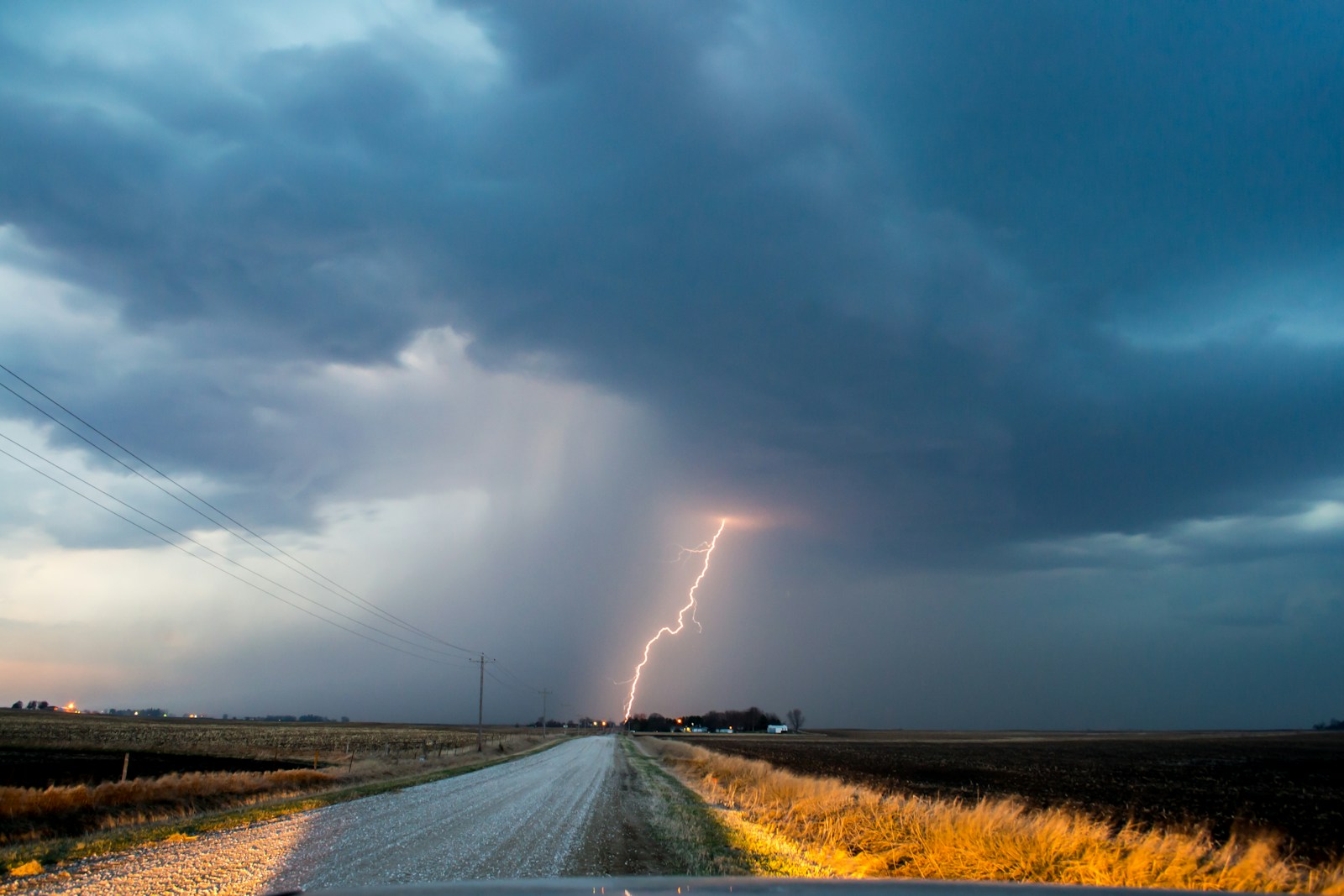
Last week the summer well and truly ended. Day after day it rained. 35mm, 25mm, 19mm, 19mm. I had been anxious. The rains used to start at Easter-time, but summer had gone on, and on. I prayed—I did. And now my two main tanks are full, and the new one is filling. I am thankful to God. But should I be? Does God have anything to do with it? Isn’t the weather just a natural phenomenon? This question has been needling me for several years.
My worst experience of drought was in 1954. My family was holidaying with my aunt and uncle in Gunnedah in NSW. When it came time to return home, I put on a performance and wanted to stay with my cousins; why couldn’t I go to the primary school in Gunnedah? The parents conferred and decided it would be OK. For reasons that needed concern us, I never went to school at all that term; I stayed around the farm getting under my aunt’s feet. They were in the middle of a severe drought. The sight which burned itself in my memory was when the dams dried up. The sheep would walk out to the water in the middle and get stuck in the mud. The crows would come and perch on their heads and pick out their eyes. It was hideous. My uncle shot a lot of sheep that year. Drought is bad for any country, but for a land without large reserves of grain is means starvation and disease and slow death for hundreds of thousands. It is devastating, and sadly, in much of the world it still is.
It was not a nice thing then when Elijah called for a drought on Israel:
Elijah the Tishbite … said to Ahab the king of Israel: “As the Lord lives, the God of Israel, before whom I stand, there shall be no dew or rain for years except at my word.”
Imagine it: not only has he predicted drought, but staked his reputation as a prophet to it. “It will only end when I say.”
Israel’s prophets were a unique phenomenon in human history—men who spoke for God—people through whom God spoke. It raises a big question: “Is it true? Were there such people? Did God really speak through human beings? If he did, would he not have spoken through people in other lands? Does he speak this way through prophets today?
The New Testament is clear: “In many and various ways God spoke to our forefathers through the prophets, but in these last days he has spoken to us through a Son …”
“Our forefathers” of course, are Israel’s forefathers; there is nothing to suggest God spoke in this way in other nations—a controversial point! (Hebrew 1.1)
Israel’s prophets stood up to their government in the name of God, no easy thing when the king had absolute power, and could order the execution of his opponents. Many of Yahweh’s prophets had recently been killed. Elijah thought he was the last man standing. He took his life in his hands when he addressed Ahab. Did Ahab take him seriously, or was he dismissed as just another nutcase? I suspect so, until the drought began to bite, and Elijah could not be found. Then he must have worried. Elijah was hiding in a ravine in a tributary of the Jordan River, north, and east of the Jordan, drinking from the stream, and being fed by the birds who brought him bread, until the stream dried up and God ordered him to the region of Sidon in modern day Lebanon, out of Ahab’s reach, where he and the widow he lived with were sustained from a supply of oil and flour that never gave out. It sounds like a story, but it happened; if it were a story, there would be much more detail; it is told in the barest simplicity, like the rest of the Elijah history. He comes from nowhere. We know nothing of his history. Just a few incidents involving him are related, and he disappears. He came at the lowest point of Israel’s history, and he changed everything. The prophet Malachi said he would come again.
The Books of Kings tells the story of Israel’s decline from the time of Solomon until God removed them from the land he had given them, and they became a slave-remnant in Babylon, modern-day Iraq. These books explain why. They are a story of the people’s relationship with God—a people represented by their kings—and we study them because they are a part of a story that involves us. At a time when modern Israel is in possession of much of its old homeland, and is waging a war they see as a matter of survival, we might ask what relevance Elijah’s story has to them now. This is too big a question for us to answer today, but we will touch on it.
Solomon’s reign of glory ended with a rebellion that split the country in two. Rehoboam reigned in the south, in the smaller kingdom of Judah with Jerusalem as its capital. The larger kingdom to the north, sometimes called Israel, sometimes Ephraim, or Samaria, was ruled by Jeroboam I. If you read the Books of Kings, you will be aware that it mostly tells the stories of Israel’s and Judah’s kings, and the frequent judgement over a bad king was that he did evil in the eyes of the Lord, and followed after the ways of Jeroboam who caused Israel to sin. The way Jeroboam made Israel to sin, is that he set up two rival sanctuaries one in the north and one in the south of his territory, so his people would not go to Jerusalem and be influenced in favour of the Jerusalem regime. It was a kind of “iron curtain” policy. Israel’s worship in the north got further and further removed from what Moses had laid down. In each sanctuary there was a bull-statue, representing God, but something forbidden in the law of Moses. It is a significant feature of the books of Kings that the story focuses on the significant movements of the nation’s relationship with God. If it were a political history, it would be different. Abah’s father, Omri, gets hardly a mention, except that he built Samaria as his capital. Archaeology reveals that he was a very powerful and significant king, but it is Ahab who gets all the attention. With Ahab Israel’s story enters a dark phase. Before Ahab, Israel worshipped Yahweh, the God of Abraham, Isaac, and Moses, though now he was represented as a bull, which was dangerous, but still it was the God who brought them out of Egypt whom they worshipped. But now there began an infatuation with Baal, one of the gods of the Canaanites. Baal was the God of the storm, who ensured the fertility of the land and the regularity of its seasons. I was thinking this week when the rains began to fall, that Perth’s climate is similar to Israel’s. The rains come in the autumn and spring — the early and the latter rains, and if they failed, it was bad news for the country. In the Near East the king was the shepherd of his people. One of his responsibilities was to make sure the seasons came and went as they should. He did this by attending correctly to the gods and their cult. There is no life without water. But now there is a new cult.
Does it matter? All religions are the same, are they not? People are tired of the old exodus stuff. Baal worship is new and exciting. It is here we must listen to how the story begins: “As the Lord (Yahweh), the God of Israel, before whom I stand … lives …” Here is the point. Old or new the God of Abraham, the God of the Exodus, lives, and Elijah stands before him. If this is true, Elijah’s story matters for us; it is part of how we can know God.
Ahab’s flirtation with Baalism became serious when he defied the law of Moses by marrying Jezebel, a Phoenician—understand Canaanite— princess. “Love me, love my god.” Jezebel came from Sidon, the heart-land of Baal worship. She brought Canaanite worship into Israel, and enforced it. In typical oriental style she ordered the execution of the prophets of the old religion. It sounds fairy-talish, but pinch yourself and be reminded that at the beginning of the Russian Revolution just one hundred years ago Lenin order the execution of priests and church wardens, and before that there was the Mexican revolution, and more recently Cambodia, the Cultural Revolution, and Islamic jihad. How can you have a revolution with the leaders of the old order still around? How can Allah bless us, if these Christians are hanging around doing their blasphemous stuff? Elijah was one of the few survivors. He delivered his warning to Ahab and went into hiding.
The books of Kings are mostly about kings, as I said. The stories of Elijah, Micaiah, and Elisha break the pattern. They are inserted because they are important. The northern kingdom had reached the point of apostasy; they have turned their backs on the Lord and are worshipping Baal. They are about to become “no longer God’s people.” He sends Elijah to call a halt.
God told him to do what he did, and he did it, but afterwards he must have doubted whether he had not imagined it, and he was scared. But the drought was real, and God kept him alive with water from the brook. That was reassuring, but he needed more reassurance than this. So God sent ravens to bring him bread. They reminded him of the way God had sustained Israel in their wilderness wanderings. He sent them manna, every day, bread from heaven. God doesn’t usually go in for miracles, but sometimes they are necessary. Elijah had an important job to do and this brought him the certainty he needed to go ahead with it. God reassured him, but the story is told to reassure us. Baal was supposed to provide the rains and the crops. He had failed. God was providing water and daily bread. And he will for those who trust him.
As the drought went on, the stream dried up. God sent Elijah right out of the country to the region of Sidon, the place where Jezebel came from. If Baal was any sort of a god, he should be able to look after his own turf. But the drought is severe there too, and this widow is scraping the bottom of her barrel. Elijah says her supplies will not run out, and they didn’t. There is flour and oil for herself, her son, and Elijah until the drought ends.
It used to trouble me: Elijah seemed selfish when he asked the widow to make bread for him first? But God had told him he would be provided for by a widow; perhaps he was probing whether this was the woman. In any case she proves herself to be a woman of quality, Canaanite or no.
And there is something else.
The boy becomes sick and dies. His mother is distraught and thinks the prophet has been sent to bring her sins to light. Elijah takes the boy and cries out to the Lord to give him back his life. God hears his prayer and the boy lives. He gives him back to his mother. The God of Abraham not only gives the seasons; he gives life; if he can give life, there is nothing he cannot do. I have searched for something in the Exodus experience to account for this, but can find nothing, except that God did promise life if they would keep his covenant. Something similar happened many years later. Jesus was entering the town of Nain when a widow’s son was brought out dead. Jesus stopped the funeral procession and healed the boy. The crowd was gob-smacked. Someone must have drawn a link with the Elijah story: “A great prophet has appeared among us,” they said—a prophet like Elijah. Jesus came to bring life to a dying world. And, of course, what happened at Nain was just a sign of what was to come. Jesus rose from death and lives, and lives to give life, and promises resurrection to all his followers.
We come back to the question whether or not it is true. If you think miracles are impossible you will dismiss the story as fiction. But if you identify with the overall story of the Bible, and align yourself with the promises God made to Abraham, you will see the appropriateness of what God was doing through Elijah at this time, even the miraculous component. You will prove yourself to be a person of faith, a person who understands that God plans to bring life to his sin and death-cursed creation, and has sent Jesus to do what Elijah foreshadowed. You will show yourself to belong to the community to which Jesus has promised resurrection and eternal life.
Truth is one thing, relevance is another. How does this story relate to us in twenty-first century Australia; better, how do we relate to it? To answer this question we need to reflect on where we stand as a society in relation to the Creator God—the God of Abraham, and the Father of our Lord Jesus Christ. Anyone can see that though we once worshipped the Christian God—the true God—let’s not be coy about that—as a nation we have moved away, and are serving other gods. Who is the Baal of modern western societies? We can answer this by asking who controls the weather, and most people’s answer would be “Nature”—Nature spelt with a capital N. Some would say “Mother Nature.” Listen to the news most nights and you will see this is true. When things go well Nature is praised, when they go badly, we just have to put up with it. I guess people differ on whether to think of Nature as an “it” or a “she.” Some people, of course, would say “Science,” and some truly do worship Science, but Science is the knowledge of nature’s regularities; it is nothing in itself.
I am not at all suggesting our modern view of nature is the same as Baalism; we shouldn’t be simplistic. Our scientific understanding of nature is different to Baal in this: nature has it regularities and it is through studying these that we learn to control it, to a degree. Our modern meteorologists are different to the prophets of Baal; they predict on the basis of many observations of past weather patterns, measurements of ocean temperatures, tmospheric pressures, wind-speeds, and a host of other indicators, and, of course, today they can get above it all and see what is going on thousands of miles away. What is similar is the denial that it is the work of God. The strict atheist insists it is all part of a self-created universe, most people would not deny the existence of God, but treat him as irrelevant. It is the actions of Mother Nature that concern us directly, and God has nothing to do with it. But he does! He controls the weather. Yes, there are regularities—laws if you like, but all the laws are his laws; he empowers them, and he could suspend them if he wished. And that is precisely what he did in the case of Elijah—and Jesus, I might add. When it comes to the weather, who knows what ultimately determines the path of a cyclone, or the length of a drought. Even the strictest materialist will admit, that “All things so connected are, that he who picks a flower disturbs a star.” The free and undetermined (except by God) action of an animal or a human being may have an effect on the weather that could never be predicted. We are right to thank God for the rains we have just had. We are right to implore him to have mercy and end a drought.
What then is likely to be the result of our national turning away from God, failing to give him thanks, robbing him of the glory that is rightfully his? We need to be careful here with our comparisons. Again there is a temptation to be simplistic. Australia is not Israel. We have no covenant with God. South Africa thought it did, but it was their covenant, and they broke it. In the case of Israel, it was his covenant with them. That is very different. They had a God-given call to live as his people, and the first requirement of that covenant was to have “no other gods but me.” Elijah pulled them back from the brink of apostasy and the destruction God had warned them of. What then are the consequences for us? God has not told us, so we cannot know. What the Bible does make clear is that God is gathering a people who will one day inherit the renewed universe. The kingdom of God is being formed in our midst. Jesus has invited all to come, and has done all that is required for us to be forgiven, cleansed, and transformed, so we can belong. Every person must make their own decision here. The king of that kingdom is Jesus. We belong by coming to him and believing in him and trusting his promises.
As for the nation, its fate is in God’s hands. We talk of the ownership rights of the original inhabitants. The fact is that God is the owner, and he gives to land to whom he will, and if he decided to give it to the Chinese, would we have any right to complain? We must wait humbly on his will, worship him alone, ask him for mercy, and do good.
Postscript
I failed to include what is possibly the most important thing we can learn from Elijah. Jesus saw it clearly when he spoke in the synagogue in his home-town. Israel was full of widows, but Elijah was sent to a Canaanite woman in a Gentile land. The blessings of life and sustenance, that were promised Israel, were enjoyed by a Gentile, not by a Jew. Jesus pointed this out and warned the people of Nazareth that if they turned their backs on the blessing God was offering them, it would pass to others. The tax-collectors and “sinner” of Jesus’ day found the blessing that the pious imagined belonged to them. As Australian-Gentiles we have received enormous blessings from God, along with the knowledge of his Son. If we reject that knowledge, and turn to self-gratification, smoking ceremonies, and whatever, God’s blessing will go to others. May our nation wake up before it is too late.