Ephesians 4.17–32
A sermon from St Margaret’s Nedlands 13th September 2026
Now this I say and testify in the Lord, that you must no longer walk as the Gentiles do, in the futility of their minds. 18 They are darkened in their understanding, alienated from the life of God because of the ignorance that is in them, due to their hardness of heart. 19 They have become callous and have given themselves up to sensuality, greedy to practice every kind of impurity. 20 But that is not the way you learned Christ!— 21 assuming that you have heard about him and were taught in him, as the truth is in Jesus, 22 to put off your old self, which belongs to your former manner of life and is corrupt through deceitful desires, 23 and to be renewed in the spirit of your minds, 24 and to put on the new self, created after the likeness of God in true righteousness and holiness. 25 Therefore, having put away falsehood, let each one of you speak the truth with his neighbor, for we are members one of another. 26 Be angry and do not sin; do not let the sun go down on your anger, 27 and give no opportunity to the devil. 28 Let the thief no longer steal, but rather let him labor, doing honest work with his own hands, so that he may have something to share with anyone in need. 29 Let no corrupting talk come out of your mouths, but only such as is good for building up, as fits the occasion, that it may give grace to those who hear. 30 And do not grieve the Holy Spirit of God, by whom you were sealed for the day of redemption. 31 Let all bitterness and wrath and anger and clamor and slander be put away from you, along with all malice. 32 Be kind to one another, tenderhearted, forgiving one another, as God in Christ forgave you.
Culture is a powerful force. When the British came to places like Africa, Australia, and the Pacific islands they thought of their own culture as civilized and Christian, and other cultures as backward and pagan. There was a revival of Christianity in 18th-century Britain and America, so their culture and laws were a lot more Christian than they had been. They get a lot of criticism for being culturally insensitive and rightly so. On the other hand they did encounter some pretty gross things. The Ashanti kings of Ghana, when they died, were buried on a bed of skulls. People went into hiding when they heard of a death in the royal family; death squads would roam the streets killing people at random for their skulls. The British banned it. In Accra, many of the shopfronts have Bible verses; you can see that Christianity has had an impact. I spotted a second-storey shop window that appeared to be full of carnival equipment. Our driver stopped and took us in. The showroom was full of coffins; you can be buried in a jumbo jet, if that’s your fancy. There was a person-sized Adidas shoe for the sports enthusiasts, a racing car, a cobra. Instead of the old customs, people with money are buried in these elaborate coffins. Cultures change.
We know about the practice in India of wives throwing themselves on their husband’s funeral pyre. Lorraine and I visited the Pandita Ramabai Mukti Mission in Kedgaon. Ramabai refused to die in her husband’s fire and began an orphanage for abandoned children. In India it is still common for unwanted children, especially girls, to be put out with the rubbish. It’s not hard to see why; the son of the people we stayed with in Mumbai was studying to be an engineer. The dowry paid by his prospective wife’s family would be US$200,000. At the mission we met one girl who had been buried alive, and was dug up by the mission people. The story of Pandita Ramabai is worth reading.
In Africa, where a man pays for a wife, the price is 11 cows. This is culture and it has its good and bad side. It is a big amount and results in men being unable to marry for many years, contributing to widespread sex out of marriage, and disease. On the other hand, it makes marriage more stable.
Culture can be good, bad, or ugly. Slavery was once culturally acceptable in most of the world. Enemies were eaten on many Pacific Islands. The killing of not yet born children has become culturally acceptable in our own country.
In the ancient world there were well known cultural differences between Jews and the rest of the empire. Jews did not work one day a week; it made them unsuitable for the Roman military. They did not expose unwanted children; they were horrified by some pagan sexual practices.
Paul is going to lay down norms of Christian behaviour which were eventually to become part of Christian culture, though that was not his purpose; it will become plain that in some respects our own culture is departing from these norms, and why.
Now this I say and testify in the Lord, that you must no longer walk as the Gentiles do, in the futility of their minds. They are darkened in their understanding, alienated from the life of God because of the ignorance that is in them, due to their hardness of heart.
Can I say, that God’s first word to us today is, “Don’t be like the Gentiles!” It sounds racist. Of course, Paul does not mean that every Gentile is guilty of every evil of Roman society, but certain evils were accepted, and were widespread, and characteristic of pagan society. Paul puts it down to three related problems all to do with God: It starts with hardness of heart; they were set in their determination to do their own thing and keep God at a distance. Their avoidance of God led to ignorance—all sorts of misunderstandings about God and his ways—the gods of the ancients mostly were not interested in the way you lived; this is one reason they were popular. And all this led to total alienation— they had no relationship with God. This is fast becoming the situation with in own country: people are determined to keep God at a distance; they refuse his revelation of himself and have embraced whatever seems good to them, leading to all kinds of foolishness, even in our courts. And the result is alienation: no relationship with God. It was the same for each one of us, until God moved into our lives, making us alive when we were dead, “dead in the sins in which we once walked.”[1]
And now we are called away from that life to something new. We are to take off the old person like a worn out set of clothes. When “man” meant “human” we used to say, “Put off the old man …” The word Paul uses (anthropos) is not gender-specific, so it is better to say “person” or “self.” We are to strip off the old self and put on the new—like a set of new clothes. This is not gradual. He does not recommend a change here and there, but for a new Christian from a pagan background, to completely change their behaviour. I think of a friend who came out of a rock band; for a long time he could not play secular music, so much was it associated in his mind with his old way of life. I was disappointed, but shouldn’t have been. Sometimes a new Christian can go too far, but much worse is to not go far enough.
Think back to what it was like when you came to Christ. How did it affect your behaviour? The first name of the Christian movement, before it was ever called Christianity was “the Way.”
Paul describes two ways, the Gentile and the Christian. The old way consists of callousness, greed, sensuality, impurity, lying, stealing, dirty talk, bitterness, rage, resentment, slander, and malice. This is not a complete list. Think of these things as some of the dirt that spoiled our old clothes. And now we are to put on new clothes: truthfulness, self-control, hard work and generosity, helpful talk to build people up, kindness, compassion, readiness to forgive. This is the life of the kingdom of God. Thinking back to what we learned last Sunday’s about the importance of life in the church, it is behaviour which promotes peace in the church and builds it up. But it affects all our behaviour with everyone. It will be the way of life of the coming kingdom, so we should practise it now.
Paul speaks of becoming like God. As a student I listened to Dequani Tafti, the Archbishop of Iran; he was on a visit to Australia. He said, “People become like the Gods they worship.” Formerly a Muslim, he embraced Christ, and it changed him. He was killed by the Ayatollah Khomeini, whose worship of Allah made him a man of violence. Jesus changes us when we truly believe in him.
Let me comment on the meaning of some of Paul’s behaviour words; they are difficult sometimes to put into English.
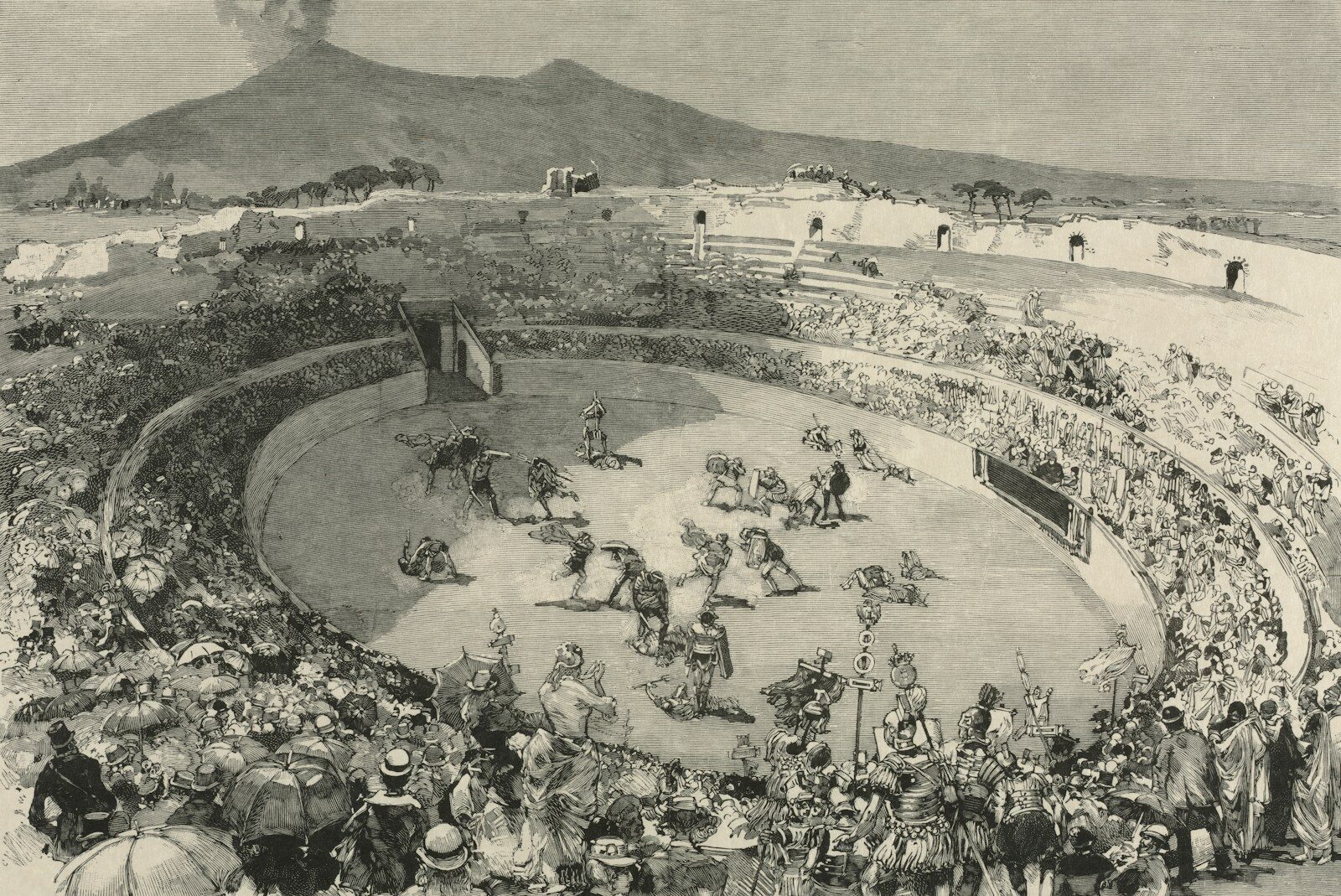
“Callous” (apelgekotes) means they lost all feeling of compassion. Think of the delight of the crowds at gladiators fighting to the death in the Colosseum. Think of crucifixions, and the excitement of seeing people being torn apart by wild animals. Think of babies being left to die on mountainsides, slaves subjected to cruel treatment. We are lucky that our own culture substitutes sport for some of these things, and TV for the reality, though we need to watch out we don’t relish watching torture and the like.
What is “sensuality?” It means an obsession with physical pleasures. Eating, drinking, sex, drugs, and a hundred other physical pleasures are all part of God’s creation, and good in their time and place. Christianity does not recommend asceticism—inflicting suffering on ourselves as a way of pleasing God. Food is meant to be enjoyed, as well as to sustain us. But pursued as a path to happiness pleasuring ourself fails. Even in this life it fails, not only that as we grow old the senses that pleasured us when we were young fail to give satisfaction, but humans are much more than pleasure machines; “man does not live by bread alone.”[2] Friendship with God and with our fellow human beings is especially important.
“Impurity”: what is that? Impurity in ancient Israel had both a moral and a ritual meaning. Eating “unclean” foods, contact with a corpse, or a bodily discharge and a host of other things caused ceremonial impurity, requiring ceremonial washing to restore a person’s right eat with others, or to enter the temple. For Christians this ceased with Jesus; “he declared all foods ‘clean’.”[3] So what did “impurity” or “uncleanness” (akatharsia) mean in a Christian context? Most often it is used in association with “fornication” (porneia), and refers to anal sex and other anal games.
What about “bitterness”? The mention of “bitterness, rage, resentment” is significant today, given the amount of violence against women in our own society. No doubt it was the same then. Anger and frustration can easily rise to a level where people lose self-control and hit out; women are often injured, and men finish up in gaol. Among the things we are to put on, are “self-control, kindness, and willingness to forgive.” These are virtues that are especially needed in a marriage, but in other area of life too.
In calling out some of the practices that were common in pagan society, Paul says,
But that is not the way you learned Christ!— assuming that you have heard about him and were taught in him, as the truth is in Jesus …
He reminds us that good behaviour is learned. It is not that some people are good and some bad. Christian behaviour springs from teaching about God and Jesus. Our whole education system hinges on the belief that if schools teach what is right, it will lead to good citizens. This is not working very well, and the reason is that something essential is missing. People need a reason to do good, more than just being told it is good. Education for the common people was pioneered by Christians. They certainly thought it would improve behaviour, but they didn’t think this would be so without the underpinning of Christian realities. My parents’ generation lost the connection between God and morality. Their morals were strong and Christian, but they thought they were self-evident; to them it was obvious this was the way to behave. But it wasn’t—not for their children. When we asked why we should not do this or that, they had no answer. Children need to be taught the whole of the Christian Faith, so they will know why some things are good and others not. This is basic biblical pedagogy.[4] Our generation was not taught to know God, so we soon gave away the morality that went with it. When 60% of the population couldn’t see that marriage is a God-given thing for a man and a woman and for the raising of a family, you know that there has been a huge cultural change, and it sheets back to their being “no knowledge of God in the land.”
But even instruction is not enough; people also need a new spirit. Motivation is important; the drive towards sensuality is powerful. Why stand against it? This is why Paul says we are to be renewed in the spirit of our minds. The Holy Spirit is the driving force which impresses the teaching about Jesus on our hearts and regenerates our own spirit. This is why, of course, even Christian schooling is not the full answer. Children cannot be forced to be Christian, they need motivation. The gospel is needed, but also the Holy Spirit. Praying for our children is vital. The home is involved where Christian values are modelled and children are prayed for and taught to pray. The church must train the parents in their responsibilities. The alternative to the gospel and the Holy Spirit is fear of punishment, and in area after area this is the direction our society is being forced to go.
Paul tells us something important here about the Holy Spirit. We have learned that the Holy Spirit is God’s gift to people when they believe in Jesus. The Holy Spirit is God’s mark of ownership, his seal; he guarantees that we are his, and will be part of the world-to-come; we saw this earlier in the letter. But it is possible for our behaviour as Christians not to be in step with the Spirit within us.
Do not grieve the Holy Spirit of God, by whom you were sealed for the day of redemption …
Lying, stealing, hating, talking dirty are all things which offend and grieve the Holy Spirit. He is a person, after all, and just as you would be sad if you were to see your spouse, or a close friend, or your minister lying or blaspheming, so the Holy Spirit is sad when a person he lives with exhibits such behaviour. We are called to walk in conformity with the calling with which we have been called.
How vital that we take these things to heart, as individuals, and as a church. I began by talking about culture. The Lord does not call us to change our culture; that is beyond any individual or church. We are to focus on being true disciples and on our church being worthy of the name. In the newsletter I have said the law—meaning the law of the country—does not spell out for us the way we should live; it establishes the boundaries within which we must live, if we wish to avoid punishment. How we should live is defined for us by our Lord. But it is a fact that when a lot of people live in a way that stands out from the way of the mob, society gradually changes, and, of course, when society changes the culture and the laws change. Some of our laws are changing for the worse. So be it. We must go on studying to be Christian, even if this becomes more difficult as society becomes more pagan. The early Christians lived in a world that was thoroughly pagan. They got on with being Christian, and in the end people saw that theirs was a better way. That crucifixion was no longer practised was just one example of a changing society. Slavery was abolished in more recent times.
[1] Ephesians 2.1–2.
[2] Matthew 5.
[3] Mark 7.
[4] Deuteronomy 6.20–25.